
Department of Islamic Studies
1. Department Profile:
- Academic and Professional Degrees and Programs Offered:
· Specialized Professional Diplomas (3 months — 80 credit hours).
· Advanced Professional Diplomas (6 months — 160 credit hours).
· Higher and Comprehensive Professional Diploma (12 months — 265/320 credit hours).
· Specialized Academic Programs (Bachelor’s, Master’s, Doctorate).
- Mode and Language of Education: Fully online education and interactive remote training (Online). The primary language of instruction is Arabic, with courses in English and international terminology.
2. Vision, Mission & Core Values:
Vision:
Global leadership in providing authentic and contemporary Islamic and intellectual education that combines strong academic grounding with an understanding of lived reality, and employs smart technologies in the service of Islamic knowledge and human development.
Mission:
To prepare a generation of scholars, jurists, researchers, and preachers who are scientifically and skillfully qualified, capable of deriving rulings and applying them to emerging issues, disseminating the values of tolerance and coexistence, deconstructing doubts and intellectual fallacies, and developing a civilized Islamic discourse that addresses the world in the language of the age and through its modern digital tools.
Core Values:
- Authenticity and Firm Grounding: Reliance on revelation, recognized sources of Islamic knowledge, and the methodologies of the mujtahid Imams.
- Contemporaneity and Understanding of Reality: Reading the developments of the age and interacting positively with human and technological issues.
- Moderation and Balance: Consolidating an approach of balance, away from extremism and excess, or negligence and moral dissolution.
- Critical Thinking and Renewal: Employing reason, evidence, and objectives-based reasoning in deconstructing problems and constructing alternatives.
- Digital Innovation: Employing artificial intelligence and modern technology in education, fatwa, and da‘wah.
3. Strategic Objectives of the Department:
- Building Islamic and Intellectual Competence: Providing learners with the foundations of knowledge in Qur’anic sciences, Sunnah, jurisprudence, principles of jurisprudence, objectives of Islamic law, and Islamic epistemology.
- Developing Ijtihad in Contemporary Emerging Issues: Training cadres in sound jurisprudential characterization of newly arising issues in the fields of medicine, technology, economics, and Islamic governance.
- Promoting Dialogue and Social Peace: Disseminating concepts of coexistence, just citizenship, and jurisprudence of minorities, and refuting hate speech and Islamophobia.
- Integrating Sharia with Modern Technologies: Leading pioneering initiatives in employing artificial intelligence and automation in Islamic legal research, digital fatwa, and digital Islamic finance (FinTech).
- Fortifying Awareness and Deconstructing Doubts: Developing logical argumentation and critical-thinking skills to identify fallacies and respond to deviant intellectual currents.

Professional Diploma in Debunking Doubts and Building Intellectual Awareness
Show Details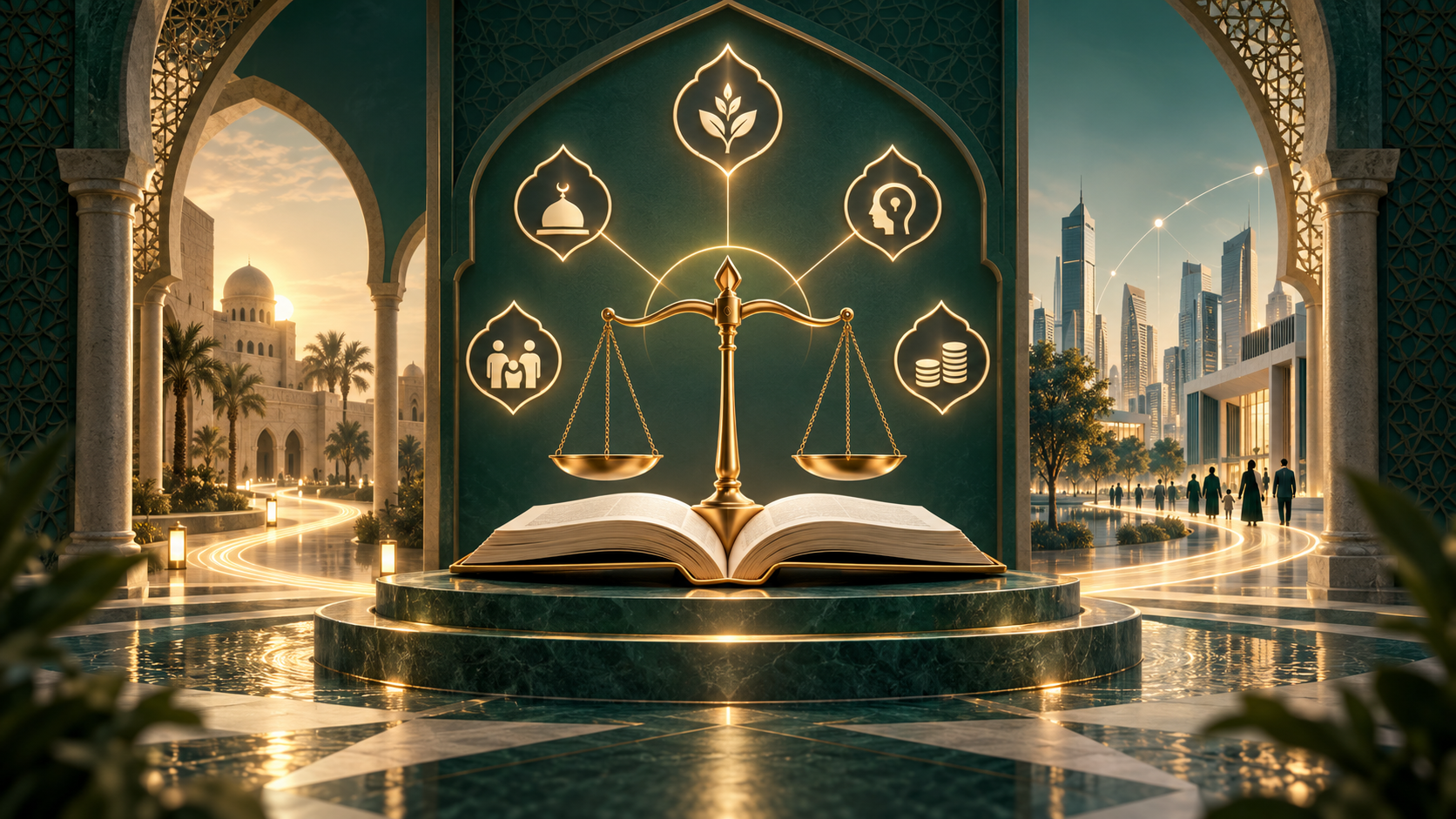
Professional Diploma in Higher Objectives of Islamic Law (Maqasid al-Shariah) and Contemporary Applications
Show Details
Professional Diploma in Islamic Public Policy (Siyasah Shar'iyyah) and International Relations
Show Details
Professional Diploma in Prophetic Seerah and Contemporary Da'wah Methodologies
Show Details
Professional Diploma in Psychological and Family Counseling from an Islamic Perspective
Show Details
Professional Diploma in Artificial Intelligence, Fatwa Making, and Islamic Content Creation
Show Details
Advanced Professional Diploma in Contemporary Islamic Thought
Show Details
Higher Professional Diploma in Shariah Foundations and Contemporary Reality
Show Details
Professional Diploma in Work Ethics and Organizational Behavior from an Islamic Perspective
Show Details
Professional Diploma in the Reality of Reason and Fallacies in the Islamic Worldview
Show Details
Professional Diploma in Coexistence and Dialogue from an Islamic Perspective
Show Details
Professional Diploma in Contemporary Fiqh Issues and Modern Emergencies
Show Details
Professional Diploma in the Fiqh of Affliction and Building Certainty
Show Details
Professional Diploma in Islamic Finance and Digital Banking (FinTech)
Show Details
Professional Diploma in Hisbah, Shariah Governance, and Institutional Auditing
Show Details
Professional Diploma in Islamophobia: Understanding and Countering
Show Details